The Playoffs Are Different (and the Same)
Draft
Part 6 of a series on the NBA’s fading home-court advantage; start with Home Court Advantage Is Fading.
Which matters more in a playoff game, the better team or the home building? Across four decades, the building has mattered enormously: even a weaker team hosting has won more often than not, and stripping the quality gap between the two teams out of the picture barely changes the home edge. Home court is supposed to matter most here, in the games with the highest stakes, and for a long time it did exactly that. Then it started slipping, and the way it slipped is the fact this series opened with. The playoff decline is not about better teams winning more at home. It is about worse teams winning less.
The playoffs are not just a shrunken copy of the regular season: they have their own structure, their own baseline, and their own timeline of decline.
How a series is shaped
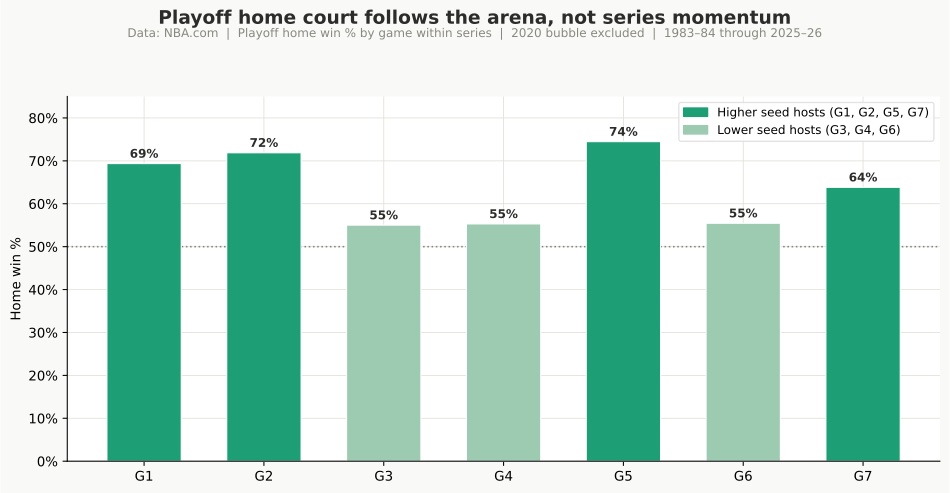
The home team usually wins Games 1 and 2 at the higher seed’s arena, and Game 5, back at the top seed, is the most lopsided game of the series. Games 3 and 4, at the lower seed’s arena, average about 55% for the home team across all decades, though as the next section shows that flat average hides a large change underneath it. Even Game 7 still goes to the home team about 64% of the time. Road teams show no evidence of adapting as a series deepens; the last game of a series is nearly as friendly to the host as the first.
The twist: worse teams stopped winning at home
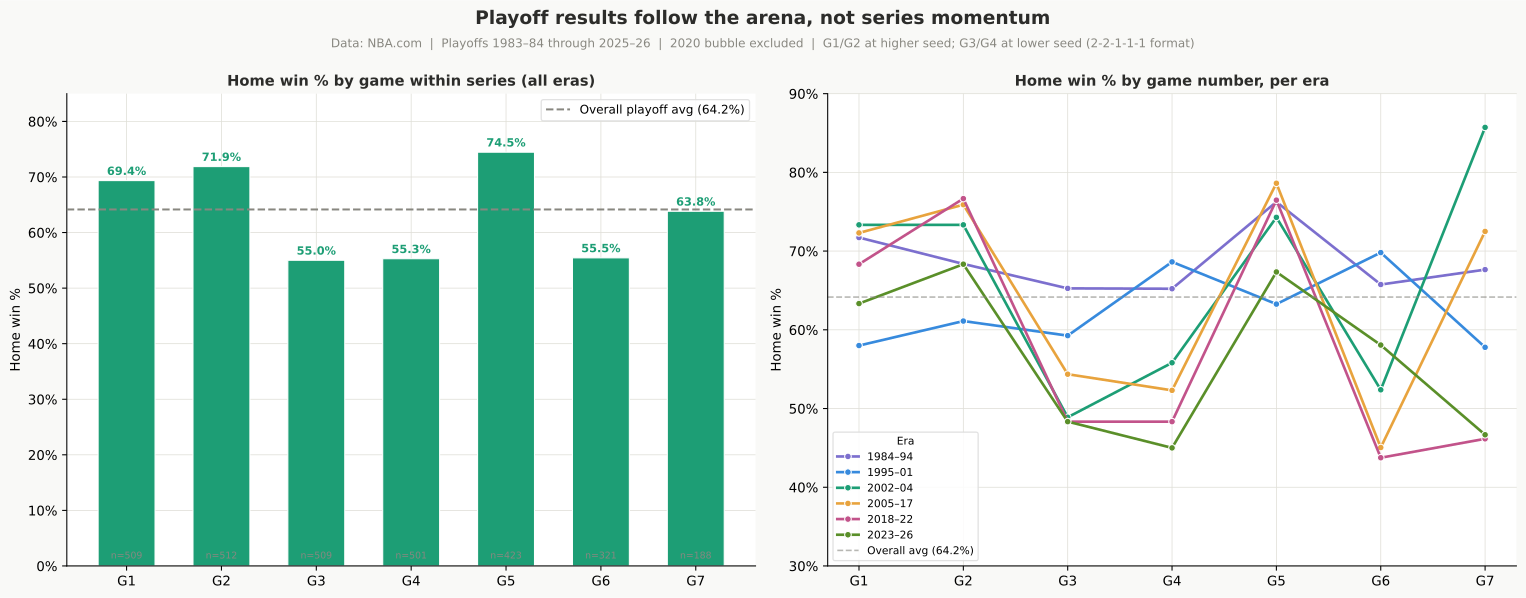
Here is where the decline actually lives. In the 1980s and 1990s, the lower-seeded team, the weaker opponent, won 65% and 66% of their home playoff games. The gap was small, under 6 points in the 1980s, and in the 1990s the lower seed won more often at home than the higher seed did. Quality barely mattered once you were in your own building; the question was not whether you would win at home, but whether you could steal one on the road.
From the mid-2000s onward the lower seed’s home rate dropped to 47–52%, while the higher seed’s held near 70–75% through 2022 before easing to about 65% in recent seasons. A gap that started at about 5–6 percentage points grew to more than 20 at its peak and still sits near 15 today. The top seeds didn’t get much better at holding serve. The weaker hosts collapsed. Home court used to compensate for being outmatched in the playoffs, and it no longer does.
Is it just weaker seeds, or real home-court decline?
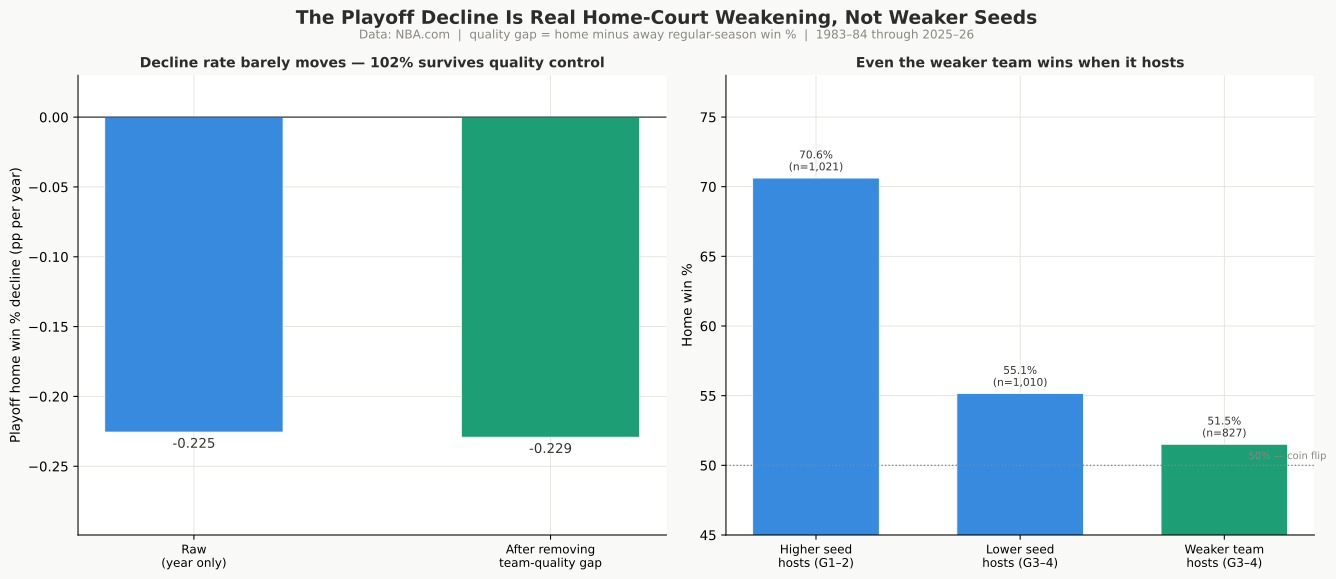
A fair objection: maybe playoff home teams win less now simply because top seeds no longer outclass their opponents the way they once did. The data says no. Strip out the quality gap between the two teams and the year-by-year playoff decline doesn’t budge; none of it is explained by seeds bunching closer together. The cleanest proof isolates the genuinely weaker team by regular-season quality: when the objectively weaker team hosts Games 3 and 4, it still wins just over half the time. Home court alone is still worth a coin-flip-beating advantage, and that advantage is exactly what has been slipping away.
Does the regular season show the same collapse?
A 2024 academic paper ran a similar quality-vs-home-court split, for the regular season, and it prompted a direct check here. Take every regular-season game where the home team was at least 10 points better or worse than its visitor last year, and the shape looks familiar at first glance: a clearly stronger home team wins 70% of those games today, a clearly weaker one only 41%. But the direction over time runs the other way from the playoffs. In 1984–94 that gap ran 34.9 points; today it is a touch narrower, at 28.2 points. Quality’s grip on who wins at home has eased slightly across the ordinary season, not tightened, even as it widened in the postseason from about 5–6 points to more than 20 at its peak. A single playoff game can amplify a quality gap in a way that 82 games of regular-season noise apparently damps down instead. (The paper that prompted this check is covered in the Related Work companion.)
A best-of-7 absorbs most of home court advantage
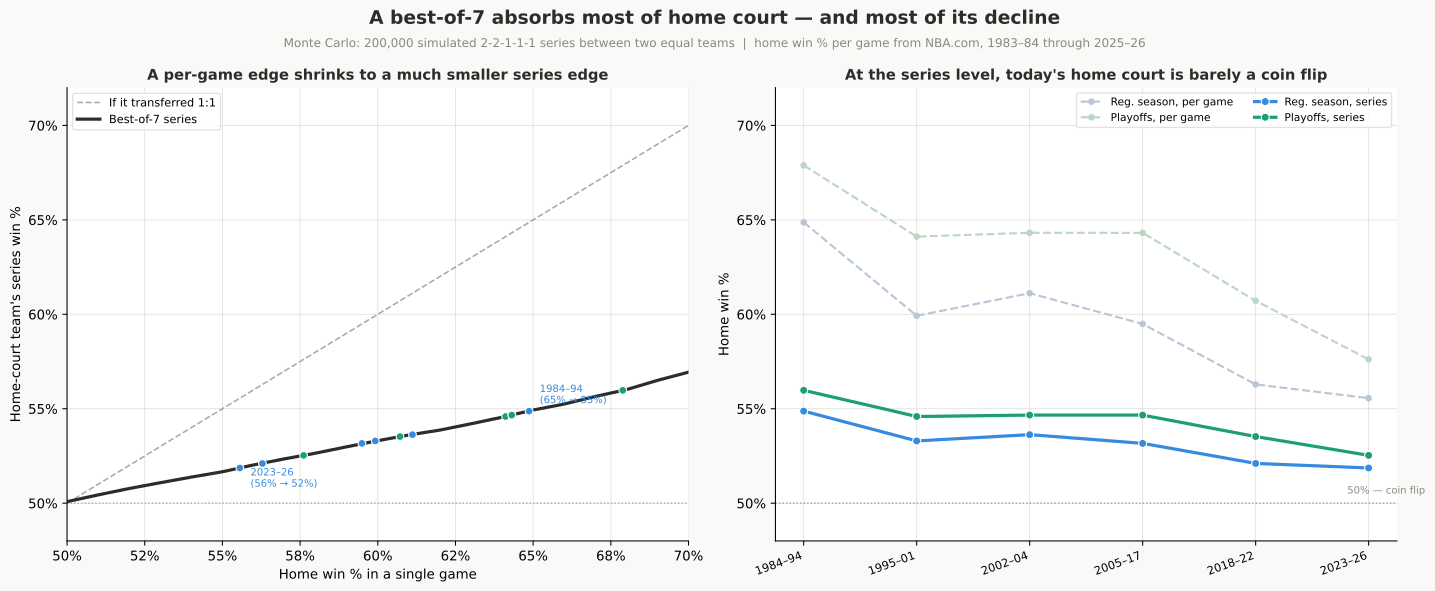
A single home game and a seven-game series are very different things. To see how the per-game advantage translates into who actually wins a series, I ran a simulation: take the home win rate for one game and play out 200,000 best-of-7 series between two otherwise-equal teams, with the home-court side hosting Games 1, 2, 5, 6, and 7. The format flattens the advantage. In the 1980s a home team won about 65% of individual regular-season games, but that turned into only a 55% chance of winning a series. By the 2020s the per-game rate had fallen to about 55%, and the series advantage with it, to about 52%: a home-court team in a series is now barely better than a coin flip. The playoffs tell the same story a notch higher, a series advantage near 53% today. Notice how much the format softens the fall: a roughly 10-point drop in the regular-season per-game advantage shows up as only about a 3-point drop at the series level.
Two cautions on the simulation. The playoff per-game rate mixes home court with seeding, since better teams host more games, so the regular-season figures are the cleaner read on the pure venue effect. And the simulation treats each game as a fresh start, unaffected by who won the ones before, so it shows how much the format dilutes an advantage rather than forecasting any real series.
Different timing, same direction
The playoffs followed the same path as the regular season, but with nearly a two-decade lag. Postseason home court advantage held firm through the 2000s and 2010s even as the regular season slipped, then joined the slide after 2018. Because each postseason rests on far fewer games than a full regular season, the direction of the playoff decline is certain but its exact size is not. The much-blamed 2014 playoff format change is not the reason for any of this, an alibi covered in full in The Alibis.
The same, part two: every playoff building looks alike
One more playoff twist, covered in full in The Buildings That Still Bite: the real spread between franchises that shows up in the regular season vanishes in the postseason, where the handful of games each building hosts can’t separate one arena from another. Yet the common advantage every host shares runs larger in the playoffs than in the regular season. That is the playoff paradox in one line: the differences between buildings disappear, and the advantage of any building at all grows.
Next: The Buildings That Still Bite. Two arenas never got the memo: Denver and Utah still punish visitors, and home blowouts keep getting bigger even as home wins shrink.
Back to the series hub: The Disappearing Home-Court Advantage
How this was made: the writing here is mostly AI/LLMs working from my analysis and direction; the numbers are all Python on public NBA data. The full note is on the series hub.